From a 3-article trial to a weekly cadence.
- Industry
- Post-purchase software for eCommerce
- Work
- Research, briefs, writing, fact-checking, publishing
- Timeframe
- Since May 2026, ongoing
- first article live, still publishing
- Since May 2026[1]
- follow-up questions mapped
- 5,572[2]
- for buyers comparing or choosing
- 93%[3]
- [1]First article live 27 May 2026; 283 by 15 Oct 2026, and the program continues. Every article is live on AfterShip’s blog. AfterShip blog (opens in a new tab)↩︎
- [2]About 20 sub-questions per article across seven query types. The insight↩︎
- [3]262 of the 283 articles target buyers at the consideration or decision stage. By the numbers↩︎
Working with Muhammad has been a great experience. He takes initiative without being asked, handles complex briefs with ease, and consistently digs into the ambiguous areas of a project on his own — you rarely need to spell everything out. The quality of his output speaks for itself. Highly recommend and would work with him again.
The work
AfterShip sells post-purchase software for online stores: tracking, returns and notifications. Its buyers compare tools before they talk to sales, and more of that comparing now happens inside AI answers.
The blog needed pages that answer those comparison questions directly and accurately, at a pace that covers the whole category.
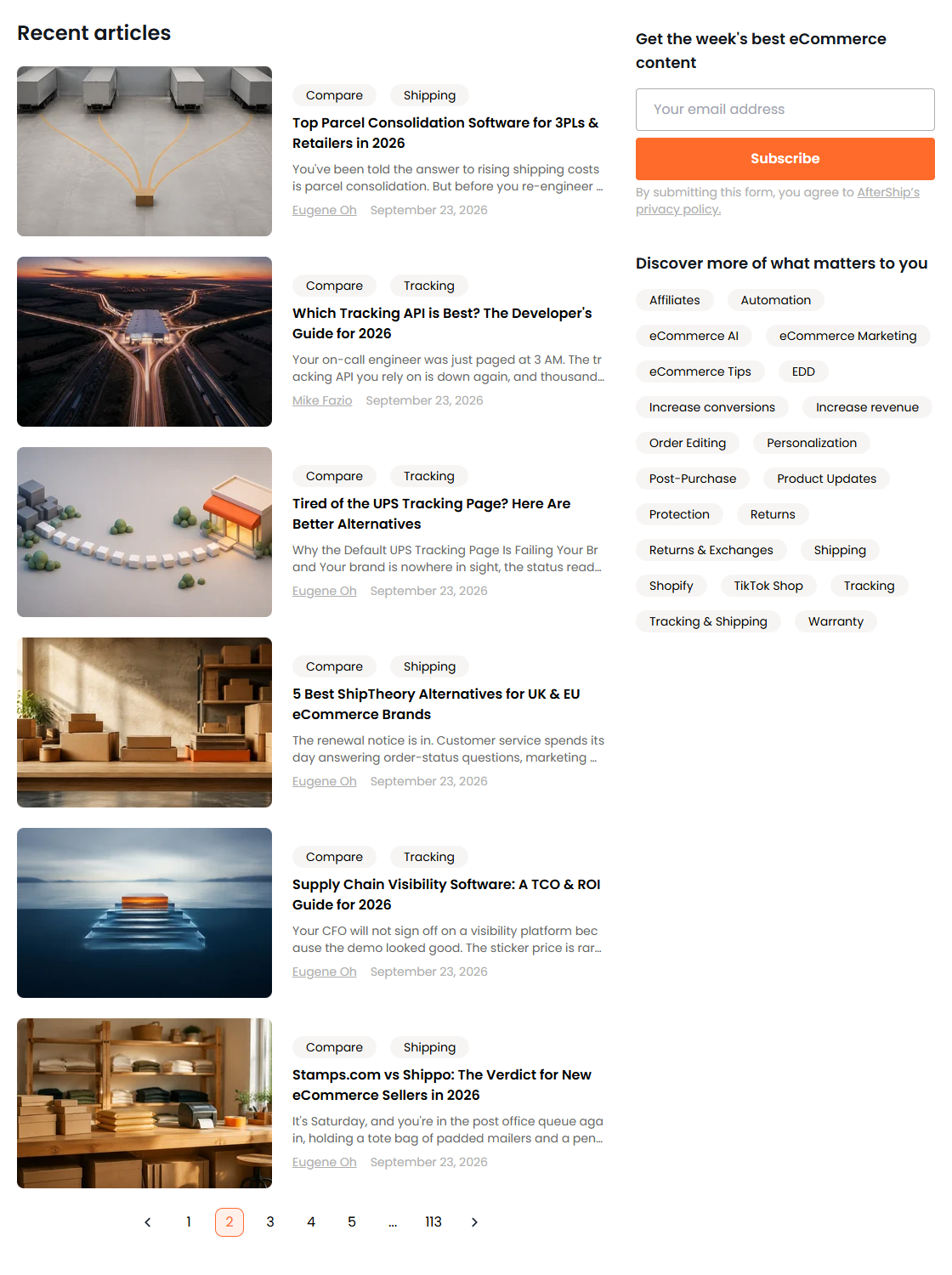
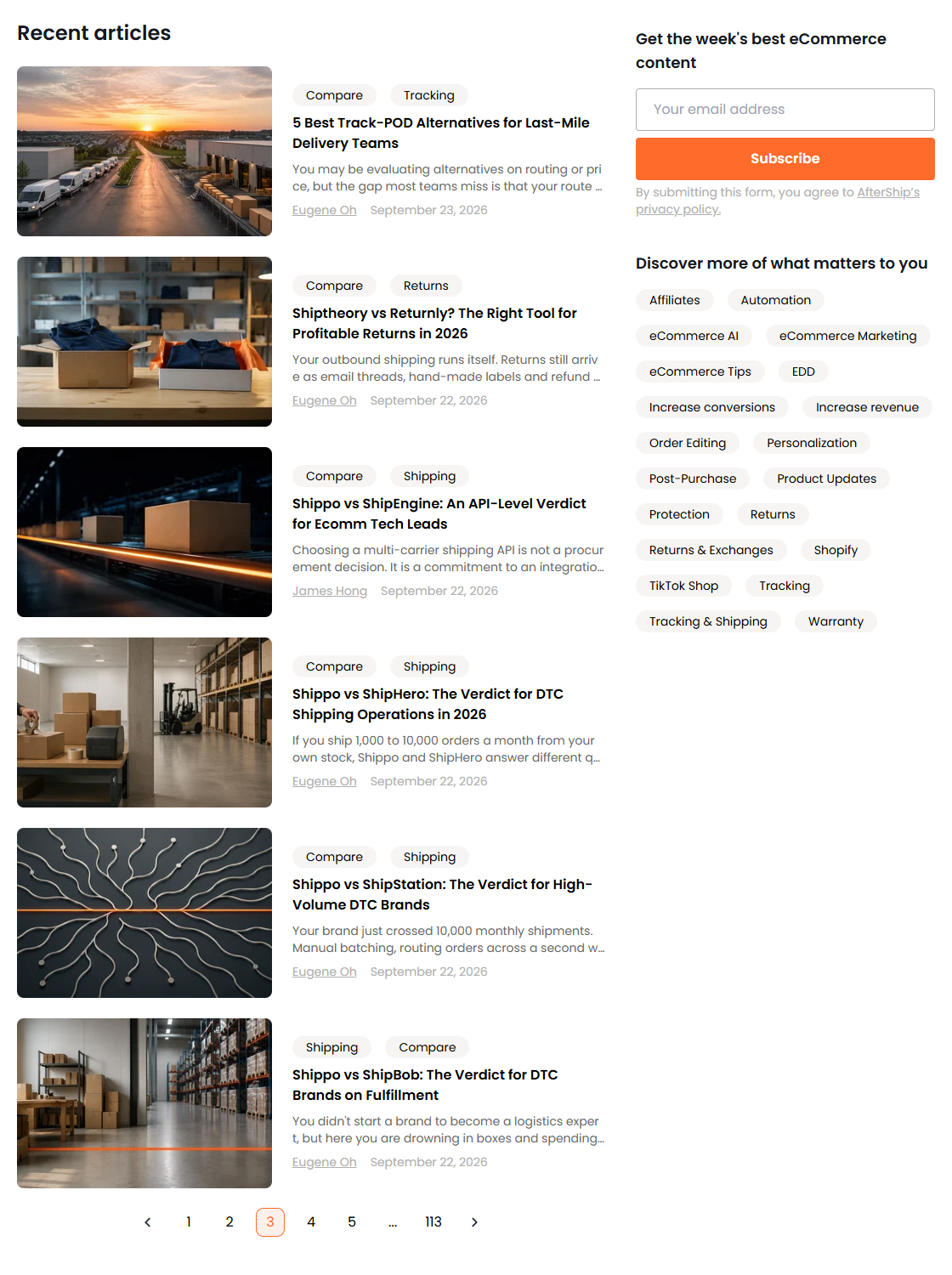
The insight: query fan-out.
An AI tool doesn’t answer a buyer’s question with a single search. It splits the question into smaller ones, runs those, and builds its answer from the pages that answer them best. A page gets cited when it answers those smaller questions clearly, with sources.
The question
Buyer asks AI best payroll software for a 20-person team?
The searches
- Comparative payroll tools compared on price
- Implicit what to look for in payroll software
- Entity-expanded payroll with accounting sync
- Related how long does payroll setup take?
- Reformulation easiest payroll for a startup
- Personalized payroll for contractors abroad
- Recent payroll rule changes in 2026
What gets cited
One article answers all seven cited
How it was done
Topic and intent
Every topic was tagged with a buyer persona, a funnel stage and a search intent before research started.
Fan-out brief
About 20 sub-questions per topic across the seven query types, each matched to the format that answers it best: a table, a list or an FAQ.
Write and fact-check
Every claim names its source, such as G2, Reddit with the subreddit, the Shopify App Store, competitor pages or AfterShip’s docs, with 2025–26 sources first. Issues were logged and fixed before publishing.
Publish and index
Each live page was checked, then submitted for indexing.
By the numbers
| Month | Articles |
|---|---|
| May (partial month) | 5 |
| June | 80 |
| July | 5 |
| August | 91 |
| September | 93 |
| October (partial month) | 9 |
Content mix by title type
- head-to-head comparisons 133
- alternatives guides 60
- “best of” lists 26
- other guides and explainers 64
262 of the 283 articles live by 15 Oct 2026 are written for buyers at the consideration or decision stage.
Evidence
One search, two places our article appears. Select either screenshot to inspect it at full size.
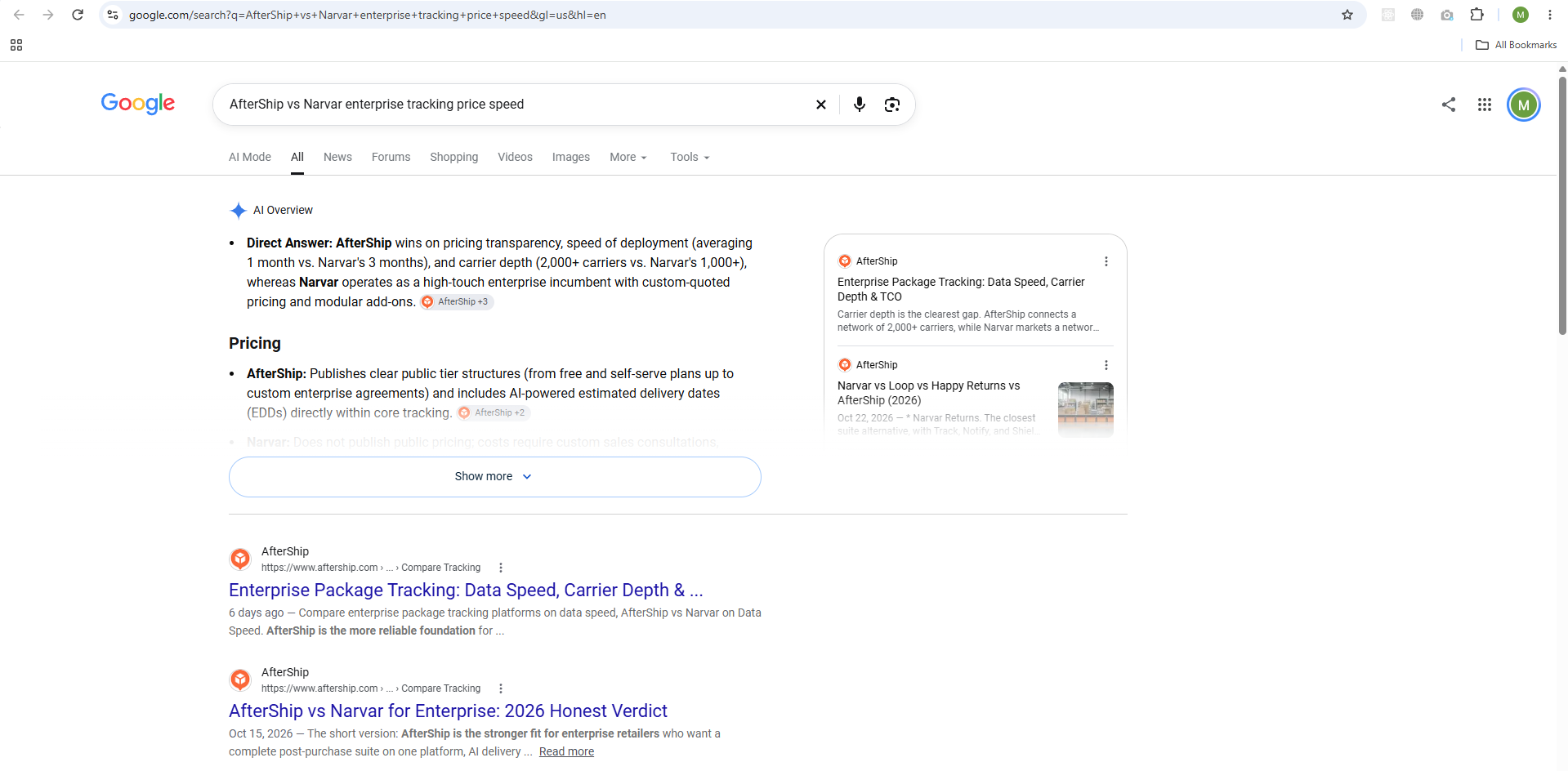
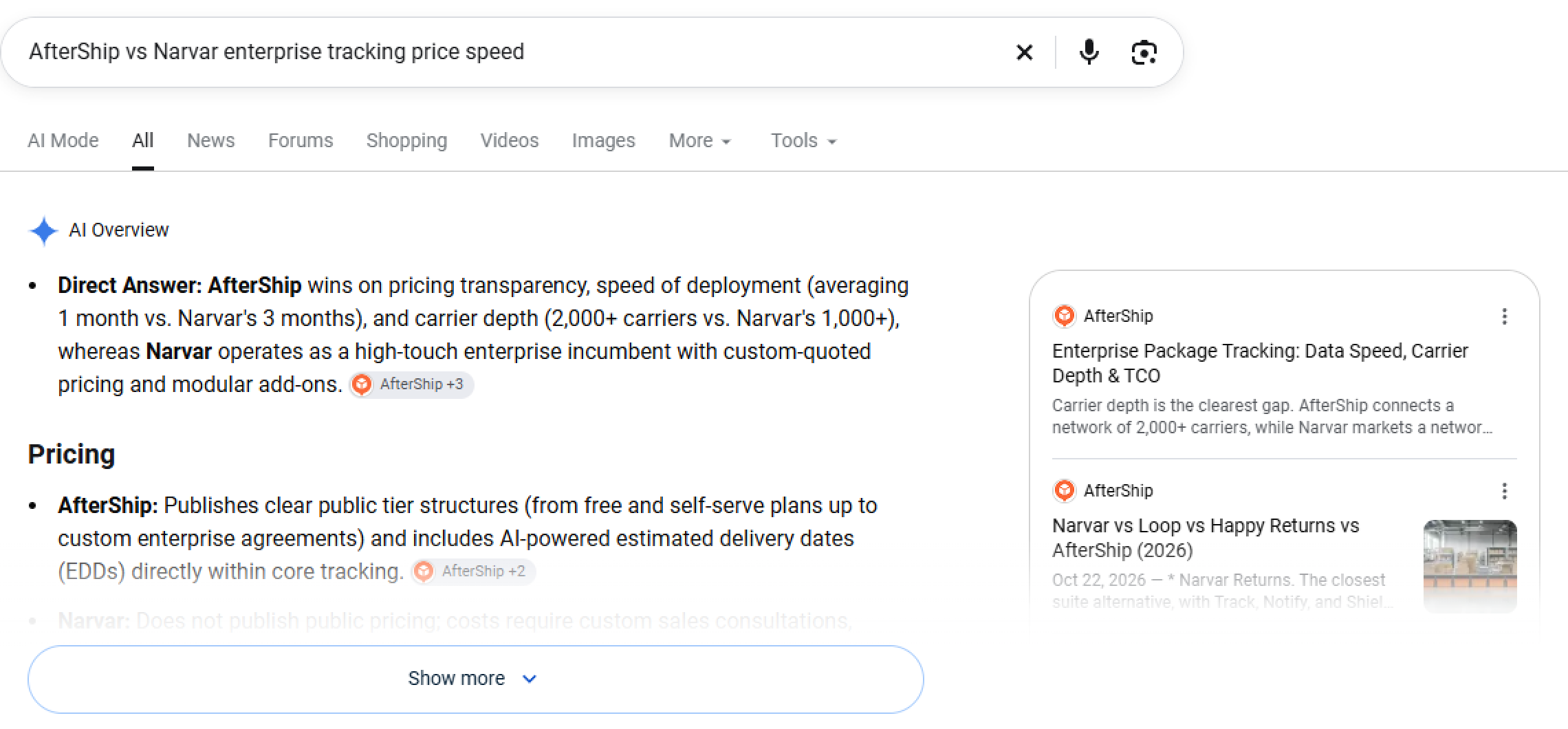
In the AI answer.
The first visible source card links to our enterprise-tracking comparison.
Check it yourself (opens in a new tab)
View 2× enlargement (pixel-doubled)
Results change with location, date and whether you’re signed in to Google.
In the search results.
The same article is the first visible organic result for “AfterShip vs Narvar enterprise tracking price speed”.
Check it yourself (opens in a new tab)
View 2× enlargement (pixel-doubled)
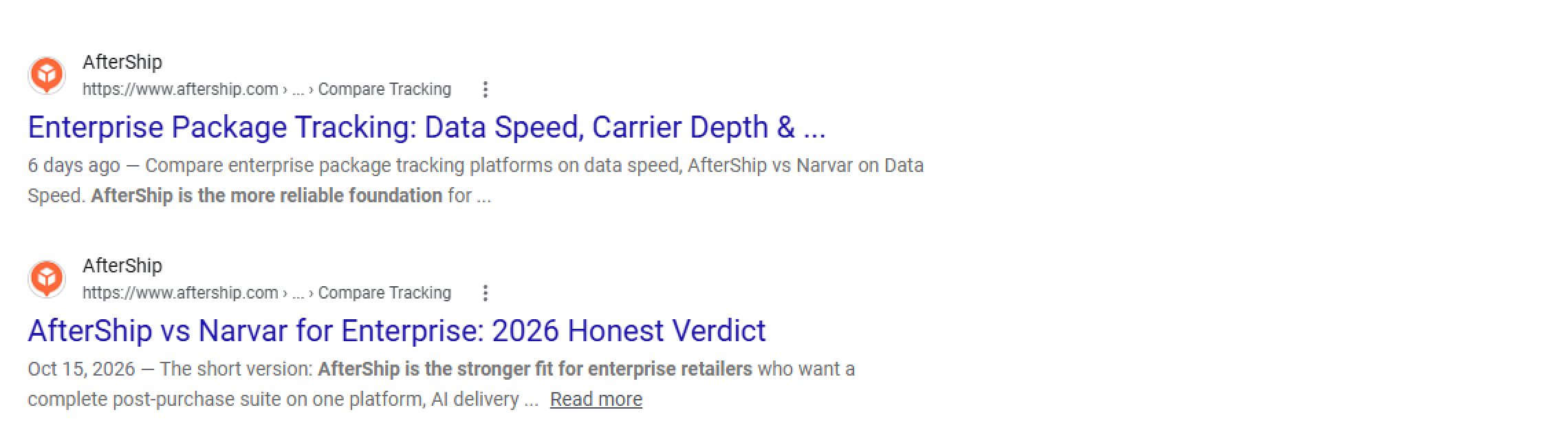
Results change with location, date and whether you’re signed in to Google.
Live articles
Enterprise Package Tracking: Data Speed, Carrier Depth & TCO
aftership.com (opens in a new tab)Built-in WMS/OMS Tracking vs. a Dedicated Solution (2026)
aftership.com (opens in a new tab)The eCommerce Tech Stack: A Founder's Guide for 2026
aftership.com (opens in a new tab)AfterShip vs Convey (project44): The Verdict for Enterprise Retail
aftership.com (opens in a new tab)What Are Branded Tracking Services? A 2026 Market Guide
aftership.com (opens in a new tab)AfterShip Tracking Alternatives: The 2026 Verdict for DTC Brands
aftership.com (opens in a new tab)
Why it worked
Planned from the questions AI asks, not only keywords.
Each brief started from the sub-questions AI search runs, so each article answers what buyers ask next.
Every claim sourced, so the answers are safe to quote.
Named sources and a fact-check before publishing keep the pages accurate enough to quote.
Steady volume, with 93 articles at the September peak.
Around 90 articles a month at full pace built coverage across the comparisons buyers make.
AfterShip owns its analytics, so this page has no traffic figures. Everything on it can be checked in public.
Free AI visibility check
See who AI cites for your buyers’ questions.
- 10 questions your buyers ask, run through ChatGPT, Perplexity and Google’s AI Overviews
- Who gets cited instead of you
- Three fixes to start with